Archway Door Circle Line Fingerprint: A Strategic Design Asset for Modern Brand Identity
In today’s saturated digital landscape, brand distinction isn’t just about standing out—it’s about resonating with intention, consistency, and quiet authority. Enter the Archway Door Circle Line Fingerprint: a thoughtfully engineered design motif that bridges symbolic depth with technical precision. More than a decorative element, it functions as a visual anchor—unifying digital interfaces, print collateral, environmental signage, and experiential touchpoints under a single, coherent identity language.
What Is the Archway Door Circle Line Fingerprint?
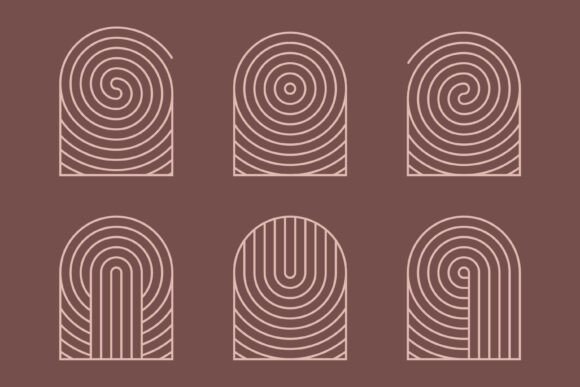
The Archway Door Circle Line Fingerprint is a proprietary graphic motif rooted in dual symbolism: the archway evokes threshold, transition, and invitation; the circle suggests unity, continuity, and wholeness; and the fingerprint introduces individuality, authenticity, and human trace. Together, they form a minimalist yet layered mark—clean enough for responsive UI, detailed enough for embossed stationery, and conceptually rich enough to support narrative-driven rebranding.
Unlike generic logo templates or algorithmically generated assets, this collection is crafted with typographic discipline, spatial rhythm, and scalable geometry. Every curve, stroke weight, and negative space ratio is calibrated—not merely for aesthetics, but for functional legibility across contexts: from a 16-pixel favicon to a 3-meter retail wall decal.
Why This Design Resonates Now
Three converging forces make the Archway Door Circle Line Fingerprint especially timely.
1. The Rise of Human-Centered Digital Trust
Consumers increasingly favor brands that signal integrity—not through slogans, but through consistent, thoughtful execution. A 2024 Edelman Trust Barometer report found that 68% of decision-makers cite “visual coherence across platforms” as a top indicator of organizational reliability. The Archway Door Circle Line Fingerprint delivers precisely that: its vector-native construction ensures pixel-perfect rendering on retina displays, while its line-weight harmony prevents visual fatigue in long-scroll web experiences or dashboard interfaces.
Consider a fintech startup launching a new client portal. Instead of relying on stock icons or fragmented UI elements, they embed the fingerprint motif into loading animations, secure transaction confirmations, and even subtle hover states—creating micro-moments of recognition that reinforce trust without overt messaging.
2. Rebranding as Continuous Evolution—Not One-Time Overhaul
Gone are the days when rebranding meant a costly, year-long campaign culminating in a static logo lockup. Today’s agile organizations treat identity as iterative infrastructure—updated quarterly, adapted per channel, and extended contextually. The Archway Door Circle Line Fingerprint supports this shift: its fully editable .AI and .EPS master files allow designers to adjust proportions for dark-mode apps, isolate line segments for motion graphics, or generate generative variants using parametric tools—all without compromising structural integrity.
A creative agency recently used the motif as the foundation for a modular branding system: rotating the circle 15° for social avatars, extracting the archway as a standalone divider in pitch decks, and converting the fingerprint contour into a custom SVG icon set for their internal design system. That level of adaptability isn’t incidental—it’s built into the asset’s DNA.
3. Print-Digital Convergence Demands Technical Rigor
Even in a screen-dominated world, tactile impressions matter. Business cards, packaging inserts, conference signage, and investor decks still shape first—and lasting—impressions. Yet many digital-first assets fail catastrophically in print: blurry edges, inconsistent CMYK conversion, or uneditable raster layers that limit production flexibility.
The Archway Door Circle Line Fingerprint solves this at the source. Its 300 DPI resolution and native vector architecture ensure crisp output whether printed on matte cotton paper or laser-etched onto aluminum nameplates. And because it ships in PDF, JPG, PNG, SVG, and AI/EPS formats, it integrates seamlessly into both Adobe Creative Cloud workflows and modern no-code platforms like Webflow or Figma plugins—no translation layer required.
Practical Integration Across Creative Workflows
For professionals juggling tight deadlines and cross-platform demands, versatility must translate to time saved—not added complexity. Here’s how the Archway Door Circle Line Fingerprint operates in real-world scenarios:
- Web & App Design: Developers import the SVG variant directly into codebases, enabling CSS-controlled color shifts, smooth SVG animations, and accessibility-compliant alt-text mapping—no designer handoff delays.
- Marketing Campaigns: Marketers use the PNG transparent version for email headers, LinkedIn banners, and ad creatives—scaling flawlessly across devices without manual resizing or quality loss.
- Environmental Graphics: Print production teams rely on the EPS file for large-format vinyl cuts, where precise Bézier curves prevent jagged edges on curved architectural surfaces—critical for corporate lobbies or exhibition booths.
- Infographic Development: Data storytellers extract the circular base as a container for radial charts or progress rings, leveraging its inherent symmetry to convey balance and proportion in complex information hierarchies.
Beyond Aesthetics: A Tool for Strategic Clarity
Design assets gain relevance not when they look “modern,” but when they reduce friction in execution and amplify strategic intent. The Archway Door Circle Line Fingerprint does both.
Its circular structure naturally guides the eye inward—ideal for spotlighting core value propositions in landing pages or investor presentations. The archway’s open form subtly signals approachability, making it especially effective for B2B service brands seeking to soften perceived complexity (e.g., cybersecurity firms, legal tech platforms, or sustainability consultancies). Meanwhile, the fingerprint’s organic irregularity counters over-sanitized AI-generated visuals—a quiet but powerful differentiator in an era of synthetic homogeneity.
Importantly, this isn’t a “set-and-forget” logo. It invites collaboration: a marketing lead adjusts spacing for mobile ads; a product manager overlays it onto app onboarding flows; a brand strategist uses its proportions to define a new typography scale. That shared vocabulary accelerates alignment across departments—turning identity from a deliverable into a living framework.
Designed for Creators, Engineered for Results
We built the Archway Door Circle Line Fingerprint with creators in mind—not as passive users, but as active co-authors of brand meaning. That means no locked layers, no flattened effects, no hidden raster dependencies. Just clean vectors, intelligently organized layers, and naming conventions that survive handoffs between Illustrator, Affinity Designer, or CorelDRAW.
It’s compatible with both PC and Mac ecosystems out of the box—and optimized for Adobe Illustrator’s latest features, including Variable Fonts integration and cloud library syncing. Whether you’re a solo freelancer managing five client brands or an in-house team standardizing assets across 12 global markets, this collection scales with your ambition—not against it.
Final Thought: Identity as Infrastructure
In an age where attention is fragmented and expectations are higher than ever, brand identity can no longer be treated as decoration. It must function as infrastructure: reliable, extensible, and deeply intentional. The Archway Door Circle Line Fingerprint reflects that evolution—not as a trend-chasing novelty, but as a rigorously considered tool for professionals who understand that clarity, consistency, and craft compound over time.
When your next rebrand, campaign launch, or digital transformation begins, choose a motif that doesn’t just represent your values—but enables them, across every pixel, press, and interaction.